
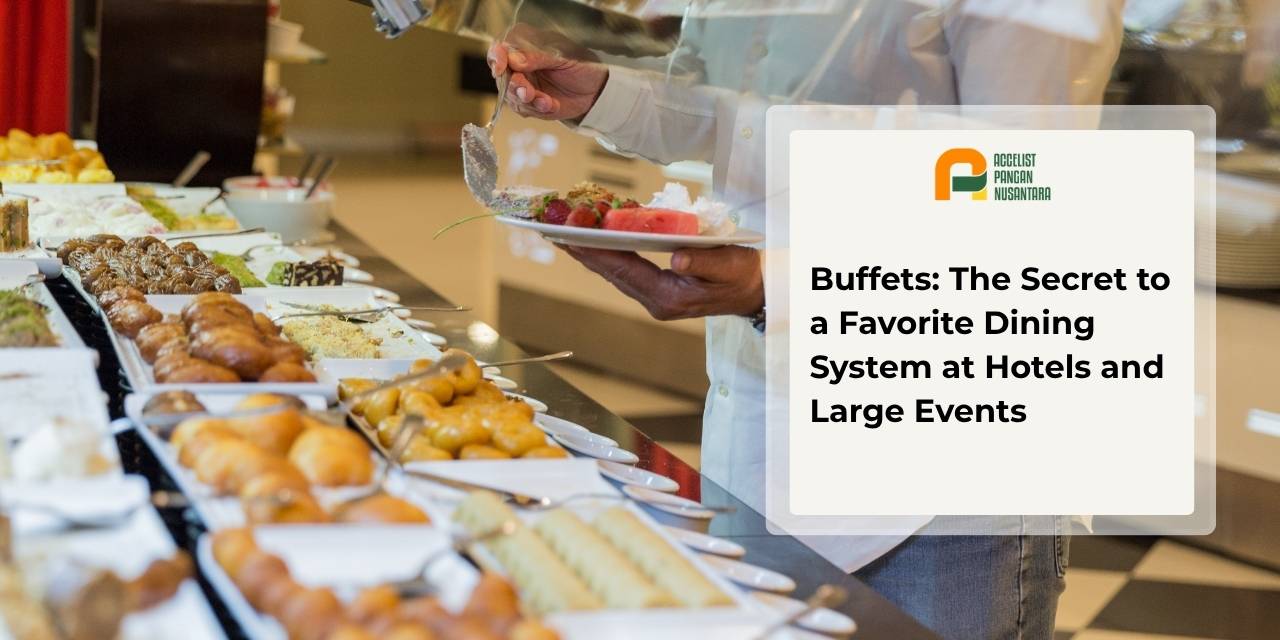
When attending a wedding reception, seminar, or corporate event, you might often see rows of tables filled with various dishes. This setup allows guests to serve themselves. As a result, this serving model has become the top choice for many events. It serves many people quickly and efficiently.
Furthermore, despite its convenience, this serving system is more than just a way to arrange food on a table. This concept holds a long history and structured operational standards. It also plays a vital role in the hospitality industry and large-scale event management.
What is a Buffet System and What is Its Origin?
A buffet is a food service system using an open presentation method. In practice, restaurant staff arrange various dishes on serving tables. Consequently, guests can take their own food according to their needs and tastes.
Therefore, this self-service concept has become an operational standard in many large-scale events. It speeds up the service process while giving guests more menu options.
Interestingly, the term “prasmanan” has a unique history. Many believe this word comes from the term “fransman”. Dutch people used this term during the colonial era to refer to French people. The French nobility’s dining tradition of serving many dishes simultaneously eventually inspired the development of the modern buffet concept.
Over time, the buffet evolved into a food service model with massive economic value. Based on data from DataString Consulting, the global buffet service market was worth around USD 1.33 billion in 2024. Experts project it to reach USD 2.5 billion by 2034, growing at a CAGR of 6.6%.
Naturally, the increasing need for food services at corporate events, hotels, and wedding receptions continues to drive this growth. This shows that the buffet system remains relevant today. It efficiently serves large crowds while offering diverse menu variations.
Read also: 12 Most Iconic Medan Souvenir Recommendations and the Secrets of Their Production Quality
What is the Difference Between Catering and Buffet?
Many people often consider catering and buffet as the same term. However, they refer to different concepts in the HORECA (Hotel, Restaurant, and Café) industry.
Simply put, catering is the food provision service, whereas a buffet is the presentation method.
| Comparison Parameter | Catering | Buffet |
|---|---|---|
| Service Style | Providers prepare food for specific locations as lunch boxes, meal packages, or event services. Staff can serve food directly or distribute it according to event needs. | A food presentation system where guests take their own food from serving tables prepared by restaurant staff. |
| Menu Flexibility | Clients and catering providers generally determine the menu and portions through an agreement before the event. | The restaurant provides various dish options so guests can choose menus based on their preferences. |
| Cost Structure and Risk | Providers usually calculate costs based on portion numbers or package orders. This helps them estimate ingredient needs easily. | Restaurants generally use a per-person price or an all-you-can-eat system. Consequently, managing stock and potential food waste becomes more challenging. |
| Staff Requirements | Requires staff for food preparation, distribution, and service based on the type of event they handle. | Requires fewer service staff because guests take food independently. Meanwhile, staff focus solely on cleanliness and refilling dishes. |
In conclusion, catering provides food preparation and delivery services. On the other hand, a buffet focuses on how organizers serve that food to guests. Because of this, organizers often use both simultaneously in an event.
Read also: 10 Popular Street Foods in Indonesia and Their Business Strategies
Main Menu Categories That Must Be in a Buffet Service
Have you ever noticed that organizers almost always place rice or staple foods at the beginning of the buffet line? Then, they follow up with vegetables and place meat dishes at the end. Organizers do not arrange this randomly. Instead, they do it as part of a menu engineering strategy. This maintains a balance between guest satisfaction and operational cost efficiency.
To run a buffet service optimally, restaurants generally provide several main dish categories consistently.
- Appetizers and Soups
This category serves to stimulate the appetite before guests enjoy the main course. Restaurants usually serve salads, warm soups, or light finger foods in relatively small portions. - Main Course
The main course is always the center of attention in a buffet. This category generally consists of carbohydrate sources like rice, noodles, or pasta. Chefs pair them with side dishes made from eggs, chicken, beef, fish, or other protein sources. - Side Dishes
Side dishes usually consist of various vegetables that complement the main menu. Besides helping create nutritional balance, the presence of vegetables also makes the serving table look more diverse and attractive. - Desserts
Chefs serve desserts to provide a sweet and refreshing sensation after guests finish their main courses. The options can include fresh fruits, puddings, traditional cakes, pastries, or even ice cream.
Read also: Food Trucks: A Profitable Concept and Solution for Limited Kitchen Efficiency
The Benefits of the Buffet Concept for Restaurants
Many hotel, restaurant, and catering business owners implement the buffet system. They do this because the concept efficiently serves large numbers of guests. Besides giving customers the freedom to choose their food, this service model also offers several benefits for business operations.
- Offers a Wide Variety of Choices
Customers can enjoy various dishes at once without being limited to a specific menu. Consequently, the numerous menu options increase the perception of value for money. Guests feel they get more food variety with a single payment. - Attracts Groups and Families
The buffet system makes it easy for restaurants to serve groups with different food preferences. Every guest can choose a menu according to their taste, dietary needs, or food restrictions. - Increases Labor Efficiency
Since guests serve themselves, management can reduce the need for front-of-house service staff. Thus, the operational team can focus more on refilling dishes, dining area cleanliness, and other support services. - Accelerates Table Turnover
Customers do not need to wait for the ordering and food preparation process from the kitchen. Furthermore, a faster service flow helps restaurants serve more guests, especially during busy operational hours.
Ultimately, through a combination of customer flexibility and business efficiency, the buffet system has become a favorite service model in the HORECA industry. This concept not only improves the dining experience. It also helps optimize the restaurant’s service capacity and operational productivity.
Strategies to Optimize Buffet Restaurant Operations
Although practical for customers, buffet restaurant operations require careful management. Serving area arrangement, stock control, and raw material selection are crucial factors. They help maintain service quality while preserving operational efficiency.
1. Securing Food Hygiene Standards
Managers generally equip the buffet area with sneeze guards. These glass shields protect the dishes from droplets when guests take their food. Nevertheless, staff do not only control food safety in the serving area. They must also start it from the cooking process in the kitchen.
Eggs are one ingredient that requires special attention. According to WHO data, unsafe food makes about 550 million people sick every year. Furthermore, Salmonella bacteria is one of the most common causes. This risk can increase if the kitchen team fails to handle raw ingredients according to food safety standards.
Therefore, many commercial kitchens have started using pasteurized raw materials. This controlled heating process helps reduce harmful microorganisms. This step helps improve production hygiene. Additionally, it supports the consistent quality of food that restaurants serve to customers.
2. Designing Layouts and Customer Flow
Serving table arrangement plays an essential role in buffet operations. Staff usually place staple foods like rice or noodles at the start of the line. Then, they follow up with vegetables and main side dishes to help regulate the food collection flow.
Besides the layout, managers must also pay attention to the dish refill speed. The kitchen needs to ensure ingredients and menus are always ready. This prevents long queues from building up during service hours.
3. Choosing the Right Serving Equipment
Serving equipment plays a vital role in maintaining food quality and safety during buffet services. For hot dishes, restaurants use chafing dishes. These heating containers help keep the serving temperature stable.
According to the FDA Food Code, staff must keep Time/Temperature Control for Safety (TCS) food at a minimum temperature of 57°C during service. Therefore, selecting heat-stable raw ingredients is just as important as using appropriate equipment. This helps maintain dish quality until the end of the service period.
4. Optimizing Cross-Functional Raw Material Storage
Restaurant management needs to manage storage space capacity efficiently, especially commercial refrigerators, in buffet operations. Using raw materials with more practical storage needs can help maximize space. This frees up room for products that actually require a cold chain, such as meat and dairy.
One alternative that many business owners use is dry food ingredients, such as egg powder. Staff can store this product more easily, and it has a longer shelf life. Meanwhile, chefs can still utilize it for various culinary applications. These range from sauces and bakery products to various egg-based dishes.
Conclusion
The menu variety offered by a restaurant does not solely determine buffet operational success. Efficiency behind its production process matters just as much. Good kitchen management serves as the key to maintaining service quality when serving large crowds. This relies heavily on food safety standards and consistent raw materials.
Unfortunately, commercial kitchens often face major challenges. Ingredient preparation processes consume too much time and take up valuable storage space. However, using more practical raw materials can help increase productivity. Furthermore, it maintains operational smoothness during service hours.
To overcome these problems, Accelist Pangan Nusantara provides Whole Egg Powder Mix as an alternative to fresh eggs. This product makes it easier for chefs to measure portions and eliminates the shell-cracking process. It also helps create more consistent results across various food applications.
Moreover, its dry form makes storage much more practical and efficient. Staff can utilize chiller space for other raw materials that require cold storage. Meanwhile, the production process continues smoothly with maintained quality.
By using Accelist Pangan Nusantara egg powder, business owners can boost operational efficiency. Ultimately, they maintain product consistency and support better food safety standards in large-scale buffet services.
FAQ
A buffet is a food service system where restaurants present various dishes openly on long tables. Consequently, guests serve the food themselves.
Restaurant staff must hold hot food at a minimum temperature of 60°C using chafing dishes. Meanwhile, they must store cold food below 4°C.
The biggest risk is the high rate of food waste. This happens due to leftover guest portions or uneaten food on the display.
Raw eggs run the risk of carrying Salmonella bacteria. In addition, they easily spoil if staff heat them continuously, making them impractical for mass production.
Organizers place plates at the starting point. Next, they provide filling carbohydrates and vegetables. Finally, they place the main protein (meat/fish) at the very end of the hot food line.