
Two trays of nastar, the Indonesian pineapple cookie traditionally baked for Lebaran, can come out of the oven with the exact same recipe, oven temperature, and baking time. Yet the results can still look completely different: one pale and dry, the other glazed in golden shine like something from a professional bakery.
The difference rarely comes from the dough itself, but from one small step that home bakers often skip before the tray goes into the oven. That simple step turns out to have the biggest impact on how the finished bread or cookies actually look.
That kind of detail matters more as Indonesia’s bakery industry keeps growing, with research firm 6Wresearch projecting a 9.38 percent CAGR between 2025 and 2029. Rising demand for premium bread and pastries in big cities is one of the main drivers behind that growth, and presentation now plays a real part in how competitive a product looks on the shelf.
That small step is egg wash, an egg-based coating brushed onto dough before baking. It’s often the one detail that separates a homemade bake from something that looks straight out of a professional bakery display.
What Is Egg Wash and Why Does It Matter When Baking
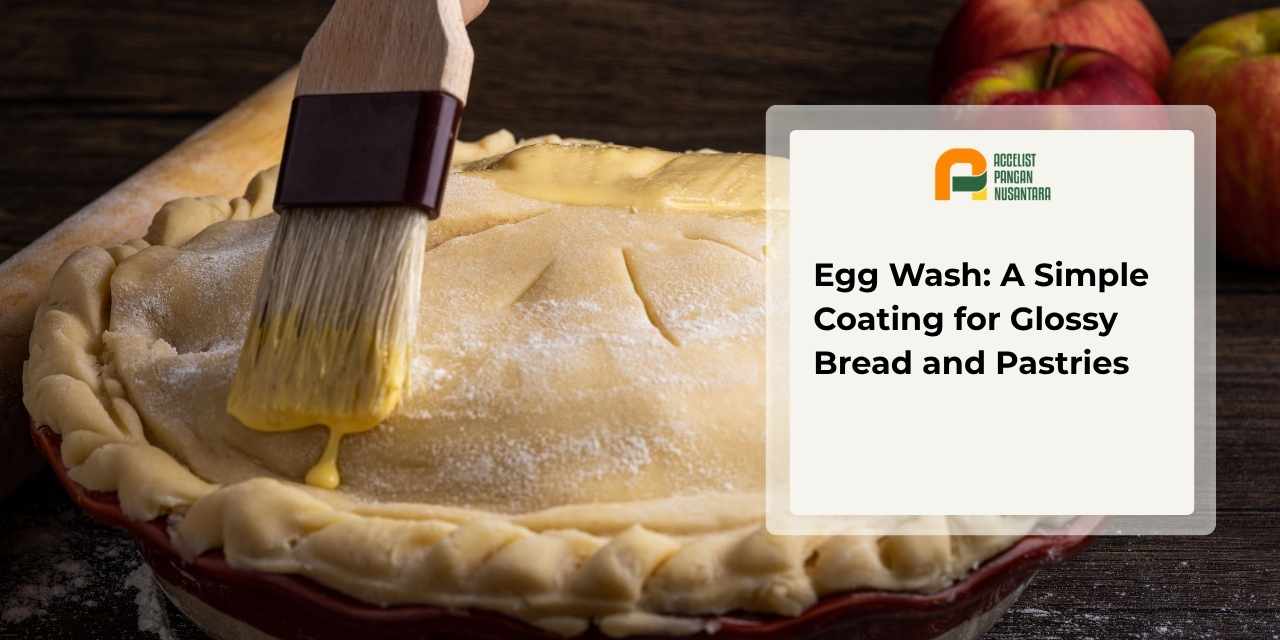
Egg wash is beaten egg, sometimes mixed with a splash of water, milk, or cream, brushed onto dough before it goes into the oven. It does more than make things look pretty: it also affects texture and how well the surface holds together.
Egg wash actually does more than most beginners realize. Here’s a breakdown, with examples from everyday baked goods.
- Gives the surface a golden color and shine after baking. On nastar, for example, the coating creates an even golden brown finish instead of a pale, blotchy one.
- Acts as a natural glue between layers of dough. On pastel or risoles, two popular Indonesian fried pastries, egg wash keeps the seams from splitting open during frying or baking.
- Adds a crisp texture to the outer layer of baked goods. Pie crust or puff pastry brushed with egg wash turns out noticeably crispier than dough left bare.
- Helps toppings like sesame seeds, coarse sugar, or oats stick firmly to the surface. Without it, those toppings tend to fall off as soon as the bread is moved off the tray.
Popular Foods That Use Egg Wash
Egg wash isn’t just for Lebaran cookies. Plenty of bakery favorites you already know also rely on this coating for their signature look.
- Nastar
These pineapple cookies are brushed with egg yolk for a deep, glossy color. A rich golden shade is often seen as a sign of a home bake that can compete with what’s sold in stores. - Croissant
A whole egg wash with a touch of water gives croissants their glossy, crisp finish. It also helps the laminated layers stay visually distinct after baking. - Pie
Pie crusts are often brushed with whole egg mixed with a bit of milk for an even golden brown finish. That shine alone makes a pie look far more appetizing. - Bagel
A whole egg wash helps sesame or poppy seeds stick firmly to bagels. Without it, the toppings fall off almost as soon as the bagel leaves the oven. - Pretzel
Egg white wash helps coarse salt cling to pretzels without changing their natural color. The result stays true to the pretzel’s classic look, just with salt that actually stays put.
Read also: Sponge Cake: A Classic Cake with a Light Texture Loved Around the World
Types of Egg Wash and Their Effect on the Final Result
Not every egg wash gives the same result. The added liquid, whether it’s water, milk, or just egg yolk on its own, determines the color, shine, and final texture of your baked goods.
| Egg Wash Type | Added Ingredient | Surface Effect | Example Use |
| Egg + water | 1 tbsp water per egg | Medium gold, natural shine | White bread and dinner rolls |
| Egg + milk or cream | Milk or cream | Deep golden brown, slightly moist | Scones, pie tops and sausage rolls |
| Egg yolk only | No added liquid | Deep yellow, strong shine | Brioche, danish and challah |
| Egg white + water | Water as needed | Clear glaze, barely any color | Sugar-topped cookies and pretzels |
| Egg + a pinch of salt | Salt and water | Savory, moderate shine | Cheese sticks and breadsticks |
A clear pattern runs through all these variations. The more egg yolk in the mix, the deeper and shinier the color, while the more liquid you add, whether milk, cream, or water, the lighter the color and the more natural the shine on the surface.
How to Make and Apply Egg Wash the Right Way
Making egg wash doesn’t take any special skill. What matters is how consistent the mixture is and how you brush it onto the dough.
- Crack the egg into a small bowl based on the type of egg wash you want, whether that’s the whole egg, just the yolk, or just the white.
- Add a tablespoon of liquid, such as water, milk, or cream, then whisk until completely smooth with no streaks of egg white left.
- Strain the mixture through a fine sieve so the thicker egg strands don’t clump on the surface of the dough.
- Brush it on thin and even with a silicone pastry brush, and avoid letting it pool in corners or folds of the dough.
This method works fine for home baking with a limited batch size. At a larger production scale, though, brushing each piece by hand becomes a bottleneck that slows down daily output.
Read also: Au Bain Marie: The Secret Behind Perfectly Smooth Cheesecakes and Professional Custards
The Challenge of Egg Wash at Large-Scale Production
Seasonal cookie factories and multi-branch bakeries face a different kind of problem than home bakers do. The sheer volume of dough that needs coating in a short window makes manual brushing far less efficient.
- Needing huge amounts of fresh eggs every single day.
A seasonal cookie factory during Lebaran, for example, can go through thousands of eggs just for the coating, separate from what goes into the dough itself. That kind of volume drives up cold storage costs fast. - The contamination risk from fresh eggs stored too long.
Bacteria like Salmonella can take hold when eggs aren’t handled properly from intake through storage. That’s a real concern for any producer shipping to modern retail with strict food safety requirements. - Color and thickness that vary from one batch to the next.
Fresh eggs naturally differ in size and quality from one to another. So one tray can come out paler than the next even with the exact same recipe. - Manual brushing that doesn’t keep pace with automated lines.
Modern production lines, like tunnel ovens or packaging machines, run at a speed regular brushes simply can’t match. Many large producers have switched to spray guns to apply egg wash evenly across high volumes.
4 Common Mistakes That Hold Back Your Egg Wash Results
A disappointing egg wash result usually isn’t about a bad recipe. More often, the problem comes down to how it’s applied or stored.
- Brushing on too thick a layer that pools on the surface.
Cookies coated too heavily tend to burn around the edges before the center is fully baked. A pooled coating also leaves the surface damp instead of crisp once it’s out of the oven. - Skipping the strain before using the egg wash.
Unstrained egg white strands clump up and leave spots on the surface of the dough. The bread ends up looking blotchy instead of evenly glossy. - Applying egg wash on dough that’s still frozen or too cold.
Frozen croissants brushed without enough time to come up to temperature usually bake up patchy. Uneven dough temperature means the wash absorbs unevenly across the surface. - Picking the wrong egg wash for the product.
Using egg white alone on brioche, for instance, leaves it pale when brioche is supposed to look deep gold and glossy. This mistake happens a lot when bakers stick to one egg wash recipe for everything they make.
Why Should You Use Egg Flour for an Egg Wash?
Those challenges are why many bakery producers have moved from fresh eggs to egg powder, both for egg wash and for dough in general. Egg powder is dehydrated egg, made through a modern drying process called spray drying that turns liquid egg into a fine powder ready to be reconstituted with water.
That drying process keeps most of the egg’s natural function intact, including its ability to bind, leaven, and add color, while extending shelf life far beyond fresh eggs. For egg wash specifically, a reconstituted egg powder solution also gives you thickness and color that’s much easier to control than fresh eggs, which naturally vary from one to the next.
- Whole Egg Powder (Tepung Telur Mix)
A blend of egg white and yolk in one product, the closest match to a whole fresh egg. It’s the most versatile option, whether for egg wash or for bread, cake, and pastry dough in general. - Egg White Powder (Tepung Putih Telur)
Made from selected egg whites with high protein content to maximize structure, volume, and stability. It’s a good fit for egg wash that needs a clear glaze without adding color, like on sugar-topped cookies or pretzels. - Egg Yolk Powder (Tepung Kuning Telur)
Rich in natural fat and lecithin, giving a creamy texture and deep yellow color with no need for added synthetic coloring. It’s commonly used as a finishing wash on nastar or premium bread for that deep golden shine.
Each of these three variants answers a different need, from a general whole-egg substitute to structure and protein, to the rich color and savory flavor unique to egg yolk.
These products come from Accelist Pangan Nusantara, a business unit under PT Accelist Lentera Indonesia, built to help bakery producers keep their egg wash consistent without depending entirely on the availability or quality of fresh eggs every day.
Conclusion
Egg wash turns out to be more than a finishing touch. It shapes the color, binding, and texture of whatever comes out of your oven, and choosing the right type, whether that’s whole egg, yolk alone, or a milk blend, decides whether the final look actually matches what you set out to make.
The real challenge shows up once production scales up, when color consistency and ingredient safety still need to hold steady batch after batch. That’s where egg powder becomes one of the most practical ways to keep egg wash quality steady without leaning entirely on fresh eggs.
Accelist Pangan Nusantara offers Whole Egg Powder, Egg White Powder, and Egg Yolk Powder for egg wash and pastry production at a larger scale. Contact Us to talk through which type of egg powder fits your production needs best.
FAQ
Egg wash is best used within a day of mixing it and should stay in the fridge until you’re ready to use it.
It’s a good idea, since straining removes the thick egg strands that can leave the surface looking spotty after baking.
Yes, some bakers swap in plant-based milk mixed with a little maple syrup or vegetable oil, though the shine won’t be quite as deep as a true egg-based wash.
Not really. Rustic breads like sourdough or baguette usually just get a water brush or a dusting of flour instead, to keep that natural, unpolished look.
Yes. Egg powder is typically processed under hygienic conditions and free of Salmonella contamination, since it goes through drying and pasteurization right at the production facility.