
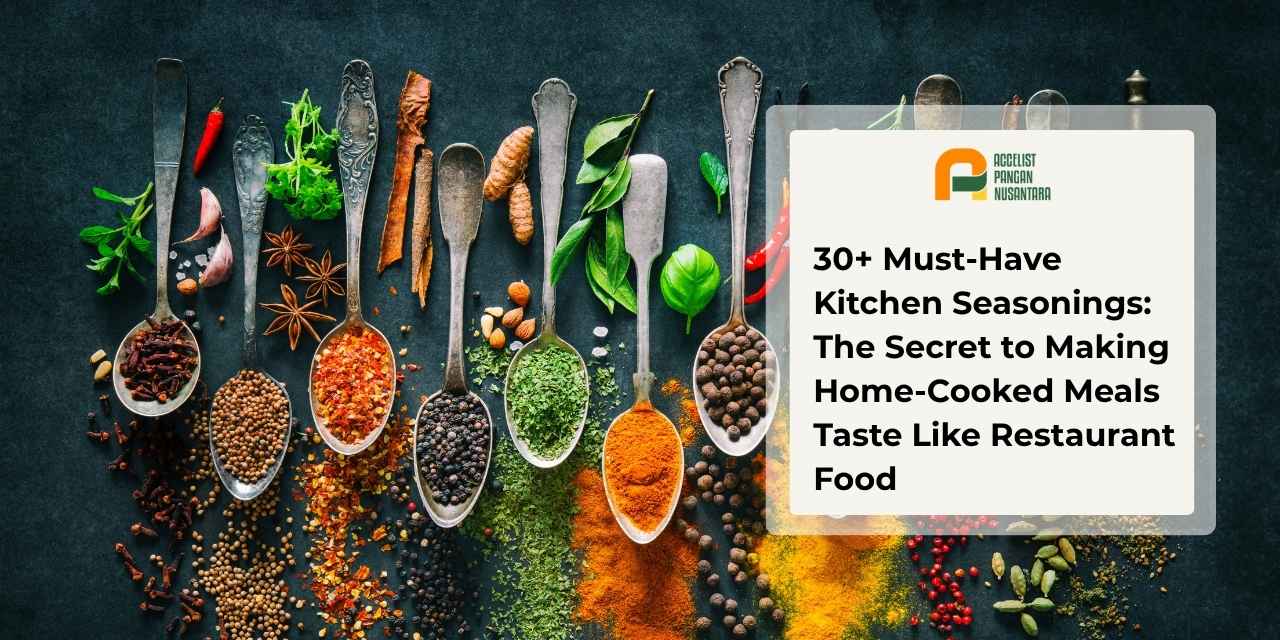
Kitchen spices represent the absolute soul in every single dish. These ingredients actively act as the ultimate foundation. They flawlessly bind various raw materials into one complete flavor unity on a plate. Without spices and herbs, even the most outrageously expensive food ingredients will simply taste bland.
Consequently, mastering spice measurements and types acts as a highly essential basic kitchen skill. This specific mixing expertise strictly differentiates ordinary home cooking from five-star restaurant standard servings.
Why Are Kitchen Spices Highly Crucial in the Culinary World?
Using spices does not merely aim to create taste on the tongue. During the cooking process, various aromatic compounds inside the spices actively participate. They vigorously form the food’s aroma, color, and absolute flavor when they react to heat.
Furthermore, the economic value perfectly reflects the massive role of this commodity. The Grand View Research Report estimates the global spice and seasoning market reached about 21.7 billion USD in 2023. Analysts project it will continuously grow to exceed 34 billion USD by 2030. These massive figures clearly show that spices have firmly become an indispensable component in the global food industry.
Here are the precise technical functions of spices when you process food ingredients:
- Improves Flavor and Aroma Profiles
First, spices actively trigger human olfactory and taste receptors. As a result, savory (umami), sweet, or spicy sensations immediately emerge. These sensations instantly stimulate your appetite. - Functions as a Natural Preservative
Second, many spices possess exceptionally strong natural antimicrobial properties (the ability to fight spoilage-causing bacteria) and antioxidants (cell damage-preventing compounds). Garlic and turmeric, for example, strictly prove their ability to drastically slow down food spoilage rates. - Improves Aesthetics and Color
Third, spices provide beautiful natural bright colors. They make dishes look incredibly much more attractive. You absolutely do not need synthetic dyes if you already use turmeric for yellow colors, saffron for golden hues, or chili for vibrant reds. - Neutralizes Unpleasant Odors
Finally, chefs in professional kitchens heavily use this function. Spices like ginger or lime juice powerfully cover fishy aromas in seafood. Meanwhile, coriander successfully neutralizes the prengus aroma (a signature animal smell) in red meat preparations.
Read also: The Secret of Comfort Food in Increasing Restaurant Profitability
Classification of 5 Types of Kitchen Spices and Their Functions
As an absolute operational guide, you need to simplify ingredient stock management in your kitchen. Professionals classify kitchen spices neatly into five main categories. They base this precise grouping heavily on physical forms and specific usage methods when you cook.
1. Basic Spices
This category contains wet spices that you absolutely must grind and sauté first. This mixture serves firmly as the main foundation for the vast majority of dishes, especially in the Asian region.
The sautéing process aims strictly to extract essential oils. Consequently, the dish completely avoids smelling langu (an unpleasant raw aroma).
| Spice Name | Characteristics and Culinary Functions |
|---|---|
| Shallot | An essential Archipelago cooking spice that provides a sweet-savory flavor and highly delicious aroma. |
| Garlic | Possesses a fiercely strong pungent flavor and aroma (sharp and stinging) for soups, sauces, and stir-fries. |
| Chili (Various Types) | Provides spicy taste sensations directly from capsaicin (an active spicy-triggering compound) and delivers natural red colors. |
| Candlenut | Provides a savory nutty flavor and beautifully thickens cooking broths. The absolute best flavor emerges if you roast it first. |
Processing basic spices deeply determines the final result of your dish. You must execute the sautéing process using medium heat. You stop only when the spices cook thoroughly and successfully release a clear oil layer on their surface.
2. Aromatic Spices (Leaves)
Cooks generally toss this group of fresh leaf spices whole right into the dish. You do not need to grind them at all. The goal purely aims to extract volatile essential oils (easily evaporating natural plant oils) during the boiling process.
| Spice Name | Characteristics and Culinary Functions |
|---|---|
| Basil | A fresh sweet-smelling leaf acting as the main ingredient for pesto sauce and various Italian-style dishes. |
| Dill | A refreshingly soft leaf that pairs incredibly popularly with fresh seafood dishes and salads. |
| Lime Leaves | Provides a highly unique fresh aroma. It applies perfectly for chicken or meat braising spices. |
| Curry Leaves (Salam Koja) | Possesses a sharp, slightly spicy, and highly refreshing fragrant aroma. It fits perfectly for signature Acehnese or Malay curry dishes. |
| Coriander Leaves (Cilantro) | Provides a beautifully fresh green citrus aroma. Chefs frequently use it in Asian, Indian, and Mexican cuisines. |
| Turmeric Leaves | Functions actively as a flavor enhancer and fishy odor neutralizer. Cooks use it heavily in signature Minang dishes like rendang and gulai. |
| Mint Leaves | Provides a cool menthol effect. It serves ideally for drinks, meat sauces, or beautifully neutralizing heavily spicy dishes. |
| Bay Leaves (Salam) | Provides a distinctively soft aroma for specific dishes. People use it heavily for uduk rice, yellow rice, and various broth-based cuisines. |
| Chives | Features an incredibly light onion-like aroma. It fits perfectly when you use it freshly chopped as a beautiful sprinkle or garnish (plate decoration). |
| Marjoram | Possesses a sharp, earthy flavor featuring a highly elegant touch of pine and sweet citrus aromas. |
| Oregano | A leaf carrying a sharp earthy aroma (a signature wet soil scent). It acts as an absolute mandatory feature in classic pizza and pasta sauces. |
| Parsley | Provides incredibly light freshness. It powerfully highlights the flavors of other main ingredients without ever dominating them. |
| Rosemary | A strongly aromatic needle-like leaf. It pairs flawlessly with butter-roasted meat dishes. |
| Sage | Possesses a highly complex and strong aroma. Chefs frequently use it for heavy meat dishes and turkey stuffing ingredients. |
| Lemongrass | Provides a signature fresh citrus aroma. You acquire the absolute strongest scent directly from the crushed white part of its stem. |
| Tarragon | An aromatic plant featuring an incredibly elegant touch of sweet root flavor. Chefs use it heavily in signature French cuisine. |
| Thyme | Provides a highly warm floral aroma (flower-scented). It fits perfectly for soups, sauces, and roasted beef preparations. |
You must fully recognize the exact right time to insert these aromatic leaves. You can toss hard-textured leaves like bay leaves and lemongrass in right from the beginning of cooking. Conversely, you should only add soft-textured leaves like basil or cilantro moments before you turn off the fire.
3. Dry Spices
Dry spices originate directly from naturally dried seeds, tree bark, or flowers. Their flavor extraction proves incredibly strong, and their quality lasts phenomenally long in storage.
Interestingly, saffron holds the absolute record as the most expensive spice in the world. This fantastic price stems directly from its insanely complicated production process. To produce roughly 450 grams of pure saffron threads, farmers must manually harvest approximately 75,000 Crocus sativus flowers.
Every single flower only produces three red stigmas. Farmers then pluck and dry them to become saffron. Consequently, people frequently dub this spice the “red gold” in the global culinary world.
| Spice Name | Characteristics and Culinary Functions |
|---|---|
| Fennel | Presents a sweet-spicy flavor combination. It actively contributes a highly fresh aroma to meat dishes or soto. |
| Anise | Possesses a signature aroma heavily resembling licorice (sweet root). Chefs frequently use it in European sausages and various cakes. |
| Andaliman | A signature Batak spice that violently delivers a numbing tongue sensation. It leaves a highly sharp citrus aroma trail. |
| Celery Seeds | Tiny aromatic seeds highly perfect for pickling spices, salad dressing mixtures, and dry marinades. |
| Mustard Seeds | Seeds that aggressively trigger a slightly sharp and sour flavor. They act directly as the basic ingredient for making mustard sauce. |
| Chili Powder (Paprika) | Provides extra spicy flavors and a beautiful smoky red color to Western and Asian cuisines. |
| Curry Powder | A beautiful mixture of various spices like turmeric, cumin, and coriander. It drastically simplifies the curry dish cooking process. |
| Mace | The bright red outer layer of nutmeg seeds. It tastes quite similar to nutmeg but bites much spicier and intensely stronger. |
| Javanese Chili (Cabai Jawa) | Provides a fiercely biting spicy taste that differs entirely from regular chili. People frequently use it in Sumatran cuisines and herbal medicine mixtures. |
| Clove | Familiar in heavy curry and stew dishes. Its sharply piercing scent powerfully minimizes the strong aroma of beef or goat meat. |
| Cumin | Possesses an incredibly sharp aroma and flavor familiar to red meat dishes. It acts securely as a mandatory spice for kebuli rice. |
| Cardamom | Adds a sharply exotic aroma for curries and soups. People also know it familiarly as a core ingredient for making herbal drinks. |
| Cinnamon | Provides a beautifully sweet woody aroma. It fiercely enriches spiced meat dishes, soups, and even delicate desserts. |
| Coriander (Seeds) | Heavily dominates Archipelago kitchens perfectly for marinades and braising spices. You should always roast it so its aroma explodes out completely. |
| Pepper | Provides a highly hot and warm spicy taste. Cooks apply both white and black pepper perfectly to almost all savory dishes. |
| Allspice (Jamaican Pepper) | Its aroma smells exactly like a powerful combination of cloves, cinnamon, and nutmeg. It fits perfectly for both sweet and highly savory dishes. |
| Nutmeg | Extremely essential in heavy meat soups. It perfectly provides sweet, warm, and highly nutty sensations (a signature nut flavor). |
| Star Anise (Pekak) | Contributes a beautifully sweet-spicy aroma. It remains extremely essential for heavily spice-rich dishes like beef gulai. |
| Saffron | The most expensive spice in the world. It delivers a luxurious golden color and an earthy floral flavor beautifully to Paella or Risotto. |
Using whole dry spices will deliver aromas that release much slower and last significantly longer inside broth-heavy dishes. Conversely, spices that you have already ground into powder will instantly release all their flavors the exact moment they hit the heat.
4. Natural Flavoring Spices (Rhizomes/Roots)
Traditional spices taking the form of fresh root rhizomes or pods act as the ultimate ancient kitchen secrets. Their presence vigorously provides an authentic depth of flavor to profoundly traditional Archipelago dishes.
| Spice Name | Characteristics and Culinary Functions |
|---|---|
| Tamarind | Provides a fresh sweet-sour taste. It easily balances heavily spiced dishes and powerfully strengthens appetizer broths. |
| Kandis Acid (Asam Kandis) | Provides an intensely dark and much bolder sour taste than regular tamarind. People heavily use this ingredient in the Sumatran region. |
| Ginger | Provides a fresh aroma and a beautifully warm spicy taste. This spice acts as an absolute mainstay for soups, hot drinks (wedang), and heavily neutralizing shrimp fishiness. |
| Kaempferia Galanga (Kencur) | Possesses a highly unique aroma. It reigns popularly as the main spice for making kencur fried rice, pecel sauce, seblak, and various sambals. |
| Kluwek | A fermented seed that violently delivers a pitch-black color. It contributes a savory nutty effect perfectly to servings like rawon and brongkos. |
| Turmeric | A highly earthy rhizome. It provides a beautifully natural yellow hue and a slightly bitter earthy flavor profile perfectly to gulai or curries. |
| Galangal | Flavors coconut milk-broth Archipelago dishes or various stir-fries brilliantly. It features a highly fibrous spicy flavor profile. |
You must peel and clean fresh rhizomes completely from leftover soil before using them. This strictly prevents them from destroying the dish’s flavor. You can crush them for clear broth soups. Alternatively, you can grind them smoothly with onions to perfectly produce a thick basic spice paste.
5. Fermented Spices
Producers intentionally rot this group of spices in a highly controlled manner with the help of good bacteria. The direct result of this biochemical process yields an extreme high-level umami flavor profile (deep savoriness). This violently enriches the dish’s overall flavor.
| Spice Name | Characteristics and Culinary Functions |
|---|---|
| Petis | A fermented paste originating from leftover seafood broth boiling. It strongly provides a pitch-black sweet-savory flavor perfectly for rujak cingur sauce. |
| Tauco | Fermented soybeans. They provide a beautifully savory-salty flavor featuring a highly distinctive aroma perfectly on various stir-fries or broths. |
| Shrimp Paste (Terasi) | The fermentation result of shrimp or rebon. It delivers an absolute savory taste and an insanely strong aroma directly into sambal. |
Because they have already passed through the fermentation process, spices in this category usually carry a remarkably high innate salt content. You absolutely must always taste the dish first before deciding to add any extra salt sprinkles into your pan.
Read also: 10 Most Popular Bandung Specialty Foods: Flavor Appeal and Culinary Inspiration
The Proper Way to Store Kitchen Spices So Their Aroma Lasts
The quality of a dish’s flavor heavily depends on the spice’s freshness level right when it touches the hot pan. You must strictly store dry spices in completely airtight containers. Tightly sealed glass jars or metal cans work perfectly.
These containers aggressively lock in volatile compounds (substances that extremely easily evaporate in free air) and essential oils. This brilliantly prevents them from escaping before you even cook them.
The placement location of your spice rack also critically determines exactly how long the ingredients can survive in the kitchen. Keep your spice collection far away from areas directly above the stove, around the oven, or work tables exposed to direct sunlight. Extreme heat and light will brutally accelerate aroma evaporation. Meanwhile, hot environments rapidly trigger spices to clump and eventually mold.
When mixing a dish, strictly ensure you always use an absolutely dry spoon to measure spices from their container. The vast majority of spice powders possess highly hygroscopic properties (a physical character that incredibly easily absorbs water vapor from the surrounding environment). Even a tiny drop of water or dew entering the jar will instantly trigger hard clump formations. This effectively destroys their flavor sharpness completely.
Read also: Why is Carbonara the Favorite Pasta Menu Worldwide? Here’s the Reason
Why Do Modern Food Industries Heavily Prefer Powdered Spices?
Commercial kitchens fiercely demand high-level speed. Utilizing fresh rhizomes and wet ingredients frequently hampers operations. Staff must tragically waste massive time just for the preparation stage (preparing ingredients before cooking).
The HORECA (Hotel, Restaurant, and Cafe) industry eventually shifted massively to using spices in a dry powder format. They did this for several highly tactical reasons:
- Slashes Preparation Time
First, powder completely frees chefs from the daily manual tasks of peeling, washing, and grinding whole spices. - Standardizes Flavors
Second, the powder form guarantees totally consistent measurements. This flawlessly maintains the exact same recipe quality across dozens of different restaurant branches. - High Storage Durability
Finally, dry spices possess an incredibly long shelf-life lasting for months without needing any refrigerators. The risk of ingredients rotting during the shipping process drops to virtually zero.
Professional kitchens also aggressively adapt this exact efficiency principle to other raw materials. Modern restaurants now routinely start using egg powder as the ultimate replacement for whole eggs. This provides the following massive technical advantages:
- Free From Disease Bacteria
First, it totally eliminates the risk of Salmonella bacterial exposure. These pathogens frequently stick and hide deep in the pores of dirty shells. - Practical and Precise
Second, kitchen staff no longer need to brutally crack hundreds of eggs per day. The powder form delivers far more accurate measurements for various cake doughs and sauces. - Saves Storage Space
Finally, egg powder lasts incredibly long sitting at normal room temperature. It consumes extremely little space compared to towering racks of whole eggs.
Read also: What is Dessert? Here’s Why Many People Always Wait for It
Conclusion
Kitchen spices act as the central element. They beautifully unite a wide variety of raw ingredients into heavily flavor-rich dishes. Every single spice mix triggers a highly specific biochemical reaction right on top of your cooking pan. A profound understanding of spice characters and their proper storage techniques serves as absolute mandatory capital for culinary business players.
To brilliantly answer the massive daily production burden, the food industry now shifts massively. They heavily use dry powder-formatted ingredients. This efficiency principle also perfectly applies to highly sensitive protein components like raw eggs. The process of cracking shells one by one and the extreme risk of pathogenic bacterial contamination clearly hamper service speed.
As a highly tactical solution, you can strongly rely on Egg Powder from Accelist Pangan Nusantara. This producer proudly provides extremely complete choices. Options range from Whole Egg Powder Mix to Salted Egg Powder. We specifically created this product line to aggressively cut preparation time in commercial kitchens.
This brilliant dehydration innovation successfully locks the texture and signature savory flavor of fresh eggs perfectly into a much more durable powder form. Egg powder blends incredibly easily with your dry spice mixtures and remains guaranteed highly hygienic. Using products from Accelist Pangan Nusantara acts as the absolute best step. It fiercely boosts efficiency while simultaneously maintaining the flavor consistency of dishes perfectly in your restaurant.
FAQ
Scallions taste incredibly strong and fit perfectly for direct cooking alongside dough. Meanwhile, chives possess an extremely light flavor, making them ideal to cut raw strictly as a garnish (plate decoration).
This replacement remains totally safe provided you drastically lower the measurement. Use exactly one teaspoon of powder spice for every one tablespoon of fresh spice because the powder’s concentration bites much denser.
The roasting process (heating in a pan without oil) aggressively aims to open the spice pores. This forcefully releases natural oils so the aroma and savory taste multiply massively.
You can quickly save the dish’s flavor by tossing in a little acid or sweet balancing ingredient. A squeeze of lime juice, tamarind water, or palm sugar directly into the broth works perfectly.