
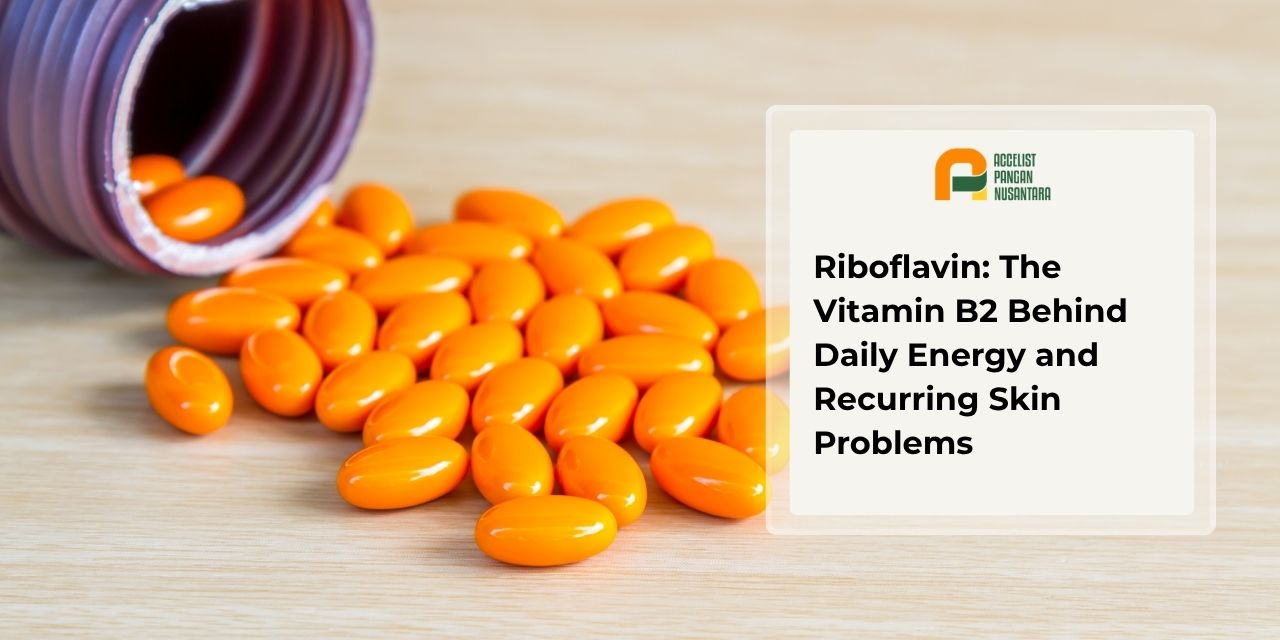
Riboflavin is a B-complex vitamin that works behind the scenes, helping the body convert food into energy throughout the day. It may not be as widely discussed as vitamin C or D, but its role is just as real, spanning cellular energy production, eye health, and red blood cell formation.
This article covers riboflavin’s functions, food sources, daily requirements, and deficiency signs, complete with references to clinical research. Read through to the end so your body doesn’t run short on a vitamin that’s often overlooked.
What Is Riboflavin (Vitamin B2)?
Riboflavin is vitamin B2, one of eight water-soluble B-complex vitamins. Because it’s water-soluble, the body doesn’t store large amounts of it, which means a daily dietary intake is still necessary.
The vitamin was first isolated from milk in the early 20th century. Its name comes from the Latin word flavus, meaning yellow, reflecting the compound’s natural color.
In the body, riboflavin is converted into two active forms, FMN (flavin mononucleotide) and FAD (flavin adenine dinucleotide). According to the National Institutes of Health (NIH) Office of Dietary Supplements fact sheet, these two coenzymes play a major role in energy production, cellular function, and the metabolism of fats and drugs in the body. StatPearls (NCBI) adds that FAD and FMN also act as cofactors for flavoproteins involved in the citric acid cycle and the mitochondrial electron transport chain.
What Does Riboflavin Do for the Body?
Riboflavin performs five key functions: converting food into energy, acting as an antioxidant, supporting eye health, aiding red blood cell formation, and maintaining skin and mucous membranes. Here’s a closer look at each.
1. Converting Food into Energy
FAD and FMN are directly involved in the cell’s electron transport chain, the process that converts carbohydrates, fats, and proteins from food into ATP, the body’s main cellular fuel.
When muscles work hard, ATP demand rises sharply, and riboflavin deficiency can slow down this energy-production process, leaving the body feeling more easily fatigued.
2. Acting as an Antioxidant
Riboflavin helps form glutathione reductase, an enzyme that maintains levels of glutathione, one of the body’s key antioxidants. This antioxidant protects cells from damage caused by free radicals, whose production increases under conditions such as cigarette smoke exposure or pollution.
3. Supporting Eye Health
The cornea and lens of the eye need riboflavin to stay clear. Cleveland Clinic notes that people with severe, prolonged riboflavin deficiency face a higher risk of developing cataracts.
Riboflavin is also used medically in corneal crosslinking procedures for keratoconus patients, where riboflavin drops are applied directly to the cornea before UV light exposure to strengthen the corneal tissue.
Another riboflavin benefit backed by fairly strong clinical evidence is migraine prevention. A randomized, placebo-controlled trial published in the journal Neurology (1998) in adult migraine patients found that high-dose riboflavin supplementation (400 mg/day) over 3 months significantly reduced attack frequency, with 59% of participants in the riboflavin group experiencing at least a 50% improvement, compared to only 15% in the placebo group. This finding was later reinforced by subsequent systematic reviews and meta-analyses confirming similar effects across different age groups.
4. Supporting Red Blood Cell Formation
Riboflavin helps the body process iron and vitamin B6 so they can be used in red blood cell formation. Long-term riboflavin deficiency can worsen existing anemia symptoms.
A double-blind clinical trial involving 103 anemic pregnant women in Boyolali Regency, Central Java, found that adding low-dose riboflavin to iron-folate supplementation tended to strengthen the increase in hemoglobin levels compared to iron-folate supplementation alone. This shows that the two nutrients genuinely work in tandem, rather than this being a general, unsubstantiated recommendation.
5. Maintaining Skin and Mucous Membrane Health
Skin cells and the mucous membranes of the mouth and lips are among the fastest-regenerating tissues in the body, and riboflavin is needed for that regeneration process.
Cracked corners of the mouth (angular cheilitis) and a smooth, shiny-looking tongue are often early signs of riboflavin deficiency. These conditions typically improve once riboflavin intake from food is restored.
Food Sources of Riboflavin
Riboflavin is widely found in beef liver, almonds, portobello mushrooms, spinach, milk, and eggs. The table below summarizes estimated content per common serving size.
| Food | Serving | Estimated Riboflavin Content |
|---|---|---|
| Beef liver, pan-fried | 3 oz (81 g) | 2.77 mg |
| Almonds, dry roasted | 1 cup (138 g) | 1.65 mg |
| Portobello mushrooms, grilled | 1 cup, sliced (121 g) | 0.49 mg |
| Spinach, boiled | 1 cup (180 g) | 0.43 mg |
| Whole cow’s milk | 1 cup (244 ml) | 0.41 mg |
| Egg, raw | 1 large | 0.23 mg |
Beef liver tops the list in riboflavin content, but intake should be limited due to its high cholesterol. A daily combination of eggs, milk, and leafy greens is already enough to help meet riboflavin needs without that risk.
Daily Riboflavin Requirements
Adult daily riboflavin needs range from 1.1–1.6 mg, depending on age, sex, and whether a person is pregnant or breastfeeding.
| Group | Daily Riboflavin Requirement |
|---|---|
| Adult men | 1.3 mg |
| Adult women | 1.1 mg |
| Pregnant women | 1.4 mg |
| Breastfeeding women | 1.6 mg |
Pregnant and breastfeeding women need more riboflavin because it supports fetal growth and breast milk production. These amounts can be met through a varied daily diet without relying on supplements.
Signs of Riboflavin Deficiency
Riboflavin deficiency, medically known as ariboflavinosis, is generally marked by cracked lips, a smooth reddened tongue, light-sensitive eyes, and inflamed skin around the mouth. It rarely occurs on its own and usually appears alongside other B-vitamin deficiencies.
According to the NIH Office of Dietary Supplements fact sheet, signs to watch for include:
- Cracks at the corners of the mouth (angular stomatitis/cheilosis), with reddened, sore skin that may bleed when opening the mouth wide.
- A smooth, purplish-red tongue (glossitis), with a loss of normal surface texture.
- Watery, itchy, light-sensitive eyes, making outdoor activities uncomfortable.
- Skin irritation, such as redness and swelling around the mouth and throat.
- Hair loss and persistent fatigue with no clear cause.
This condition is often found in people with very restricted diets, for example due to eating disorders or chronic digestive illness. StatPearls also notes other at-risk groups, including people with malabsorption disorders, chronic alcohol use, or genetic disorders affecting riboflavin metabolism. Dietary improvement is usually enough to resolve mild symptoms without specific medication.
Can You Get Too Much Riboflavin?
Excess riboflavin is generally not harmful because, as a water-soluble vitamin, any surplus is excreted through urine. This is why urine can turn bright yellow after taking high-dose B-complex supplements.
Cases of riboflavin toxicity have not been widely reported to date. Even so, very high supplement doses, such as the 400 mg/day used in the migraine study mentioned above, should still be discussed with a doctor first, particularly for people with kidney conditions.
Maintaining Riboflavin Intake: A Simple Step Toward a More Energized Body
Riboflavin isn’t a vitamin that gets talked about as much as vitamin C or D. But its role in energy production, skin health, and cell protection, backed by clinical evidence in migraine and anemia, means its deficiency shouldn’t be taken lightly.
Meeting riboflavin needs isn’t difficult as long as the diet is reasonably varied. Eggs, milk, leafy greens, and nuts can already serve as a reliable daily source without needing extra supplements.
For food industry professionals, if you produce bread, noodles, sauces, or functional food products that require a natural riboflavin source in a practical, stable, and shelf-stable raw material form, egg powder especially Whole Egg Powder from Accelist Pangan may be worth considering.
Our team can help calculate riboflavin requirements per formulation and provide technical product specifications (nutritional content, certifications, MOQ). Contact the Accelist Pangan team for a free consultation and sample request.
FAQ
They are the same nutrient; riboflavin is simply its chemical name.
No, riboflavin can only be obtained from food or supplements.
Mild symptoms like cracked lips typically improve within a few weeks after dietary improvement.
Riboflavin is fairly heat-stable, but it degrades easily when exposed to light.