
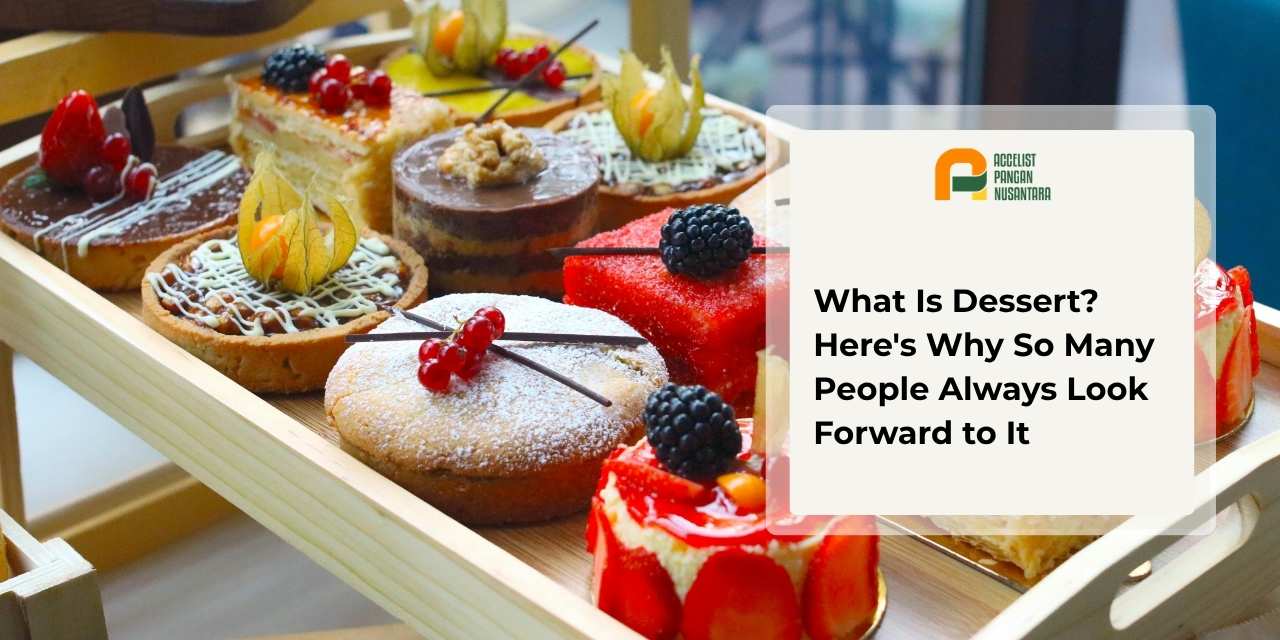
Have you ever felt you still need something sweet after finishing a filling main course? This desire to neutralize your tongue palette at the end of a meal occurs frequently.
Furthermore, many restaurants respond to this habit by offering a slice of chocolate cake, two scoops of ice cream, or a soft pudding. This perfects your dining experience. We know this serving at the end of the meal as a dessert.
What is Meant by a Dessert?
A dessert acts as a sweet-tasting menu that servers present at the very final stage of a full-course meal (a sequential dining arrangement from appetizer to main course to closing). Its presence does not merely act as an addition. Instead, it functions as the peak of the dining event that guests eagerly await.
Linguistically, people absorbed the word dessert from the French word “desservir”, which means to clear the table. The practical application perfectly aligns with that meaning. Waiters will clear the dirty plates leftover from the main course first. Only then will they place the sweet menu in front of the guests.
Although Europeans have enjoyed sweet foods for a long time, the dessert concept as a course (an independent dish session) only became standardized in the 17th century. The French culinary tradition played a massive role in establishing this closing dish as the final session in a formal dining arrangement.
Today, the dessert industry holds a massive portion of the global market. Various market research reports show specific product segments continuing to grow. This heavily includes frozen desserts (such as ice cream or gelato) and pastries (baked layered dough).
Consequently, the CAGR metric or Compound Annual Growth Rate (the average annual growth percentage of a business) stands steadily around 4.08% from 2026 to 2031.
Increasing urbanization rates (lifestyle shifts toward cities) and public purchasing power deeply drive this growth. Modern consumers willingly spend extra money to seek diverse premium dining experiences and pamper themselves.
Read also: Black Forest Deliciousness: Knowing the Mandatory Components and Raw Material Innovations
4 Main Functions of Dessert in a Banquet Arrangement
Many people mistakenly think eating a closing dish merely serves as an excuse to add calorie intake after the stomach feels full. In reality, expert chefs intentionally design this final serving with highly specific goals that impact diners both physically and emotionally.
Its presence aims strictly to create flavor balance. Chefs want to ensure guests do not leave the table feeling uncomfortable or nauseous after consuming various heavy foods.
Here are the four essential functions of presenting this sweet dish:
- Palate Cleanser
First, the sweet taste and cold temperature of servings like ice cream or sorbet (smooth-textured fruit ice) work highly effectively to rinse the mouth. This effect instantly neutralizes any lingering fishy, spicy, or deeply savory flavors from the main dish. - Provides a Complete Sensation of Fullness
Second, sugar content actively stimulates the brain to release serotonin (a chemical carrying happiness and satisfaction signals in the nervous system). The release of this hormone sends an emotional signal. It makes you clearly feel the dining session has truly concluded and satisfied you completely. - Aids the Digestive Process
Third, some servings made from fresh fruits like pineapple or papaya contain highly active natural enzymes (compounds that speed up chemical processes in the body). These components quickly help the stomach break down solid protein residues from the meat dish you just ate. - Elevates the Banquet’s Aesthetic Value
Finally, this closing session provides empty space for Pastry Chefs (chefs specializing in cakes and bread) to show off their plating skills (the art of arranging food on a plate). A beautiful visual arrangement successfully closes the dining experience with a luxurious impression that sticks permanently in the guests’ memories.
Interestingly, human ability to still eat sweet servings even when the stomach feels extremely full is not merely a myth. The science and medical world recognizes this unique phenomenon as sensory-specific satiety (feeling full specifically toward one type of flavor profile).
When the brain starts feeling bored after processing a string of savory or salty foods, the sudden appearance of a new sweet aroma and flavor profile automatically tricks the stomach walls. They relax again and instantly provide extra space.
Read also: Buffet: The Secret of the Favorite Dining System in Hotels and Big Events
Differences Between Dessert and Appetizer
For those who rarely enjoy fine dining banquets (high-class formal dining), the terms appetizer and dessert sometimes sound confusing. In fact, these two dishes occupy completely opposite ends of the timeline.
An appetizer works specifically to open the dining event, while a dessert arrives strictly to close the entire sequence. Let us examine the technical comparison to understand it much easier:
| Comparison | Appetizer | Dessert |
|---|---|---|
| Serving Time | Servers present it at the very beginning as the first order. | Servers present it at the very end as the final closing. |
| Main Function | Arouses appetite and actively prepares the stomach. | Provides satisfaction signals and beautifully neutralizes the tongue palette. |
| Dominant Flavor Profile | Savory, sharply sour, or mildly spicy to brilliantly provoke saliva. | Sweet, fresh, or creamy (soft and thick-textured) to soothe spice intensity. |
| Ingredient Characteristics | Fresh vegetables, salty cheeses, or tiny portions of light proteins like seafood. | Sugar, cream milk, eggs, chocolate, and chunks of fresh fruits. |
| Portion Size | Extremely small and light, generally designed for you to finish in just one or two bites. | Medium, just enough to satisfy sweet cravings without causing stomach overcapacity. |
Although their functions contradict each other, these two dishes actually work together seamlessly to create a perfectly balanced dining flow. The appetizer ensures the stomach stands ready to receive the dense and heavily spiced main dish. Subsequently, the dessert takes over the task to cool and deeply refresh the mouth afterward.
Classifications and Types of Desserts in the Culinary World
The professional culinary world categorizes closing dishes into several standard classifications. Experts base these classifications strictly on heat processing techniques and basic ingredient ratios, not just the serving sequence.
1. Baked Desserts
This category thoroughly covers all sweet dishes that cooks process by baking inside an oven. The main base almost always relies on wheat flour, eggs, fats like butter, and leavening agents that react directly to heat.
In larger restaurant production scales or commercial kitchens, dough binding agents do not solely depend on fresh eggs. Chefs frequently utilize egg powder applications. This brilliantly maintains the dough texture consistency so it stays highly stable and expands perfectly during baking.
Common examples include sponge cakes, chocolate brownies, various fruit pies, and tart cakes.
2. Custard & Cream-Based Desserts
This type of serving offers a highly wet, melting, and very thick texture when it touches the tongue. The key to its deliciousness lies directly in a mixture of milk, fresh liquid cream, and egg yolks that cooks prepare slowly using low heat.
Egg yolks play an incredibly vital role as natural thickening agents. This component actively binds all the liquid into a solid form, yet the final texture remains perfectly soft and completely unstringy.
Examples include crème brûlée and panna cotta.
3. Pudding and Jelly-Based Desserts
The main characteristic of this closing dish features its chewy texture, high water retention, and often transparent appearance. The cooking process must pass a liquid boiling stage first. Then, cooks chill it inside the refrigerator until it hardens completely.
To solidify the liquid securely, the chef must add specific binding agents. The most common binding ingredients cooks use include gelatin powder (animal cartilage extract), agar-agar from seaweed extract, or cornstarch.
Examples include milk chocolate pudding, fruit jelly, and blancmange.
4. Frozen Desserts
This frozen category always becomes the prima donna, especially in hot-temperature tropical countries. The kitchen relies heavily on sub-zero temperatures to lock the liquid dough into soft ice crystals that instantly melt the moment they enter the mouth.
The manufacturing process demands cooks stir the dough continuously while aggressively lowering the temperature. This stirring technique effectively prevents the dough from turning into a hard block of ice. Consequently, the final texture stays incredibly light and smooth.
Examples include milk ice cream, gelato, and sorbet.
5. Confectionery (Candies and Sweets)
Chefs intentionally design dishes in this group in extremely small portions that perfectly fit a single bite. The making process focuses purely on manipulating extreme heat to crystallize pure sugar, or techniques to melt solid chocolate blocks.
The final result of this process yields a tiny bite with an extremely strong and sharp sweet flavor intensity. Because the portion remains tiny, waiters often serve these sweets as the very final complement alongside a cup of black coffee or plain tea.
Examples include chocolate truffles, block caramels, nougat candies, and marshmallows.
6. Fruit-Based Desserts
If you seek the healthiest and lowest-calorie route to close a heavy banquet sequence, this stands as the ultimate answer. The main focus of this dish purely highlights the natural sweet and sour flavors of high-quality fresh fruits.
The serving remains highly flexible and requires no complicated processing techniques whatsoever. You can serve the fruit raw in diced cuts, drizzle it with a little bee honey, or lightly cook it with sugar until the texture softens perfectly.
Examples include fresh fruit salads, cinnamon baked apples, and fruit compotes.
Examples of the Most Popular International Dessert Menus
The international culinary world holds a standard of globally recognized sweet serving masterpieces. Each of these dishes carries a uniquely distinctive flavor and texture character from its origin country. This spans from highly precise temperature processing techniques to the utilization of specific local raw materials.
Today, this row of cross-continental menus has become a mandatory serving standard in various premium restaurants and modern cafes.
Here are excellent examples of popular servings:
- Tiramisu (Italy)
This no-bake masterpiece perfectly unites ladyfinger biscuits (long dry biscuits) soaked in coffee with thick layers of mascarpone cream (a signature Italian cream cheese). Chefs strictly craft this authentic cream from beaten egg yolks. This guarantees the texture melts flawlessly in the mouth. - Mochi (Japan)
This signature eastern round cake utilizes pounded glutinous rice. This provides an extremely chewy texture that feels sticky on the fingers. Furthermore, the center of this dish hides a highly legit sweet red bean paste filling. - Soufflé (France)
This legendary pastry serving (baked cake dough) remains incredibly fragile. It can expand significantly high, completely exceeding the limits of its mold. The absolute secret of its structure relies fully on beaten egg whites that successfully trap hot air during the oven process. - Pavlova (Australia/New Zealand)
Its shape resembles a giant cake whose base purely forms from a mixture of egg whites and granulated sugar. The outer wall breaks highly crisply when cut. Meanwhile, the inner cavity features a completely chewy texture as soft as a marshmallow (a soft sweet made from sugar and gelatin). - Crème Brûlée (France)
Chefs intentionally protect this custard pudding (sweet thick cream) with melted caramel sugar. They burn it crispy using a torch (a special kitchen flamethrower tool). Its deeply thick savory taste heavily depends on the egg yolk volume cooks use in the bottom dough.
Read also: 15 International Foods You Can Easily Make at Home
The Execution Challenges of Egg-Based Desserts
Creating sweet masterpieces like pavlova or crème brûlée in large portions often turns into an operational nightmare for commercial restaurant kitchens. Classic pastry recipes (European cake dough) demand chefs to execute an extremely strict and precise egg liquid separation process.
They frequently only need the egg yolks strictly to craft custard cream (sweet thick cream). Alternatively, they separate the whites exclusively to whip up a meringue (stiff sweet egg white foam).
Utilizing shelled fresh whole eggs on an industrial scale triggers massive inefficiency problems. Chefs must tragically waste hours of productive time every single day just to crack and separate egg liquids one by one.
This conventional practice directly leads to a massive accumulation of raw material waste. Leftover unused liquids easily go to waste. For example, dozens of leftover egg yolks remain completely unused when the kitchen focuses heavily on producing pavlova dough. Ultimately, they become highly vulnerable to rotting uselessly in the kitchen corner.
More than just time and waste problems, the severe threat to consumer safety acts as the most fatal risk kitchens must guard against. Closing dishes served completely cold and raw without an oven baking process remain highly prone to biological hazards. This includes mousse (chilled sweet foam cream) or traditional tiramisu sauce. Using shelled fresh eggs in these cold-temperature menus creates a highly dangerous potential. It can easily transmit shell-borne bacteria directly to the guests.
Conclusion
Understanding the dessert concept helps you actively design highly memorable banquet menus. This serving does not merely make guests full. Instead, it successfully closes the dining session with an incredibly luxurious sensation. To achieve perfect textures and visuals, chefs heavily depend on raw material quality. This especially applies to eggs acting as the main dough binder.
Unfortunately, utilizing shelled fresh eggs frequently creates massive hassle in commercial kitchen operations. Restaurants must constantly face two huge problems. They face severe bacterial contamination risks from raw eggs and piling kitchen waste due to leftover unused egg whites or yolks.
As the ultimate way out, Accelist Pangan Nusantara produces high-quality egg powder (pure eggs dried into powder form). Our Egg White Powder brilliantly makes pavlova dough expand maximally and incredibly sturdy.
Meanwhile, our Egg Yolk Powder absolutely guarantees your tiramisu cream melts flawlessly without any dangerous Salmonella bacterial threats. This raw material solution lasts much longer in storage and brutally cuts losses due to waste. You can directly measure it without wasting any time cracking shells one by one.
FAQ
A dessert serves as a sweet-tasting closing food menu that servers always present at the very final cycle in a full dining session.
The sugar component effectively stimulates the brain to release serotonin. This actively creates feelings of relaxation and happiness, and provides ultimate fullness confirmation.
Yes. Fresh cut fruit served separately after heavy meals acts as a completely natural closing dish variant rich in digestive enzymes.
Servers present the appetizer first with a sour-savory taste to heavily trigger hunger. Meanwhile, the closing serving arrives last to beautifully neutralize the oral cavity.
Only the specific protein structure in fresh egg whites can massively trap air pockets when cooks whip them at extremely high speeds alongside sugar.