
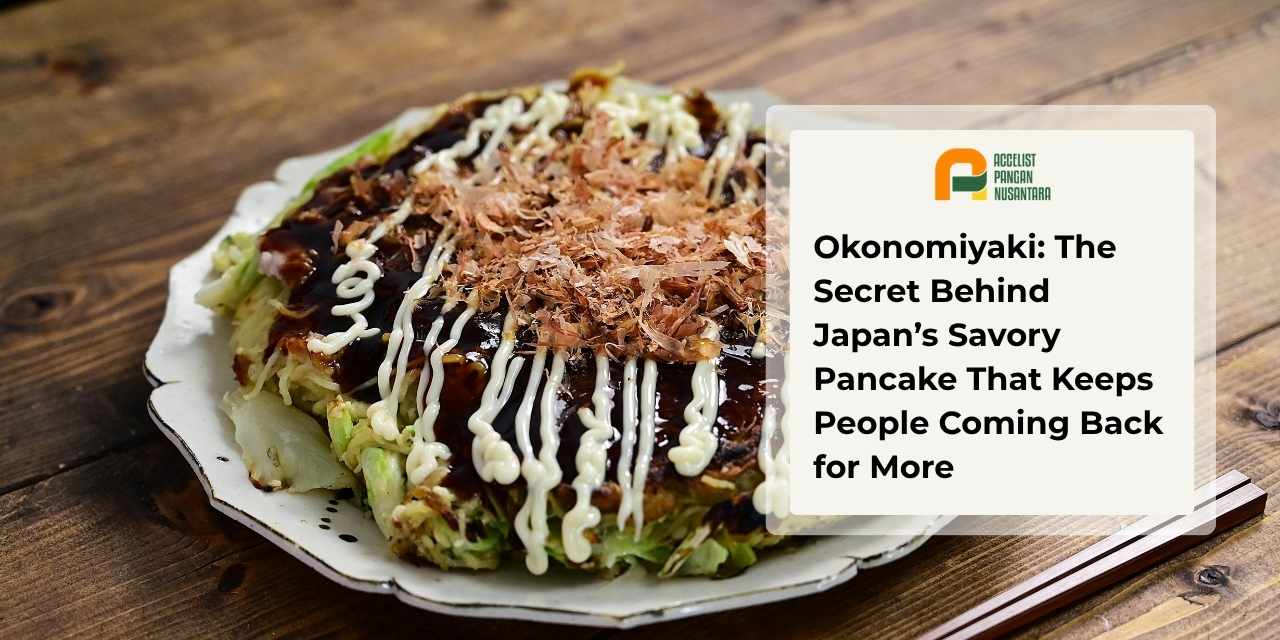
The fragrant aroma of flour dough and fresh cabbage slices sizzling on a hot iron pan always successfully triggers the appetite. This sizzling sound blends perfectly with the thick sauce spread and a generous sprinkle of katsuobushi (thinly shaved dried skipjack tuna). Furthermore, these fish flakes seem to dance actively when hit by hot steam.
Consequently, this visual and aromatic combination creates a highly appetizing sensation even before waiters serve the food on a plate. This sensory appeal slowly elevates okonomiyaki from a mere light side dish into a prime culinary star that many food lovers actively seek.
What is Okonomiyaki?
Okonomiyaki represents a nutrient-dense pan-fried Japanese dish (cooked on a hot flat pan with a little oil). People frequently dub this food as a savory pancake or Japanese pizza. Ultimately, it fits perfectly as a highly satisfying main course.
Etymologically (based on word origins), the name of this food perfectly represents the flexibility of its filling ingredients. The word “okonomi” strictly means “as you like” or “what you desire”. Meanwhile, “yaki” simply means grilled or cooked.
This means this dish basically starts from a liquid flour batter. You can then actively mix that batter with various combinations of fresh vegetables, sliced meats, or seafood according to the chef’s absolute creativity in the kitchen.
This menu clearly acts as much more than just an ordinary street food snack. Okonomiyaki’s popularity has aggressively evolved into a massive-value culinary industry in Japan.
According to data compiled by the Okonomiyaki Academy and various Japanese tourism publications, Japan boasts over 15,000 to 16,000 specialized okonomiyaki restaurants spread across the country. This staggering number successfully makes okonomiyaki one of Japan’s gastronomy (the art of cooking) icons. Furthermore, it acts as a crucial attraction for tourists wanting to enjoy authentic Osaka and Hiroshima culinary delights.
Read also: Exploring Cooking Techniques: Five-Star Kitchen Secrets and Raw Material Management
The Origin and History of Okonomiyaki
The evolution (gradual development) of this food proves extremely long. It started merely as a light snack and transformed into a highly filling main menu. According to historical records from Horetaro, experts strongly believe okonomiyaki’s ancestor originated from funoyaki. This thin snack utilized flour dough and miso (fermented soybean paste). People have known it since the 16th century, and hosts frequently served it during traditional Japanese tea ceremonies.
As time passed, this dish continuously evolved through various forms. It became monji-yaki and issen yōshoku (classic savory pancakes) before finally developing into the modern okonomiyaki that deeply pampers our tongues today.
So, how did the taste transform into an incredibly savory and richly filled dish? The modern form of okonomiyaki started gaining massive popularity right after World War II ended. Specifically, this happened when Japan suffered a severe food crisis, forcing people to mix highly simple ingredients in their kitchens. They racked their brains utilizing wheat flour, fresh cabbage slices, and absolutely any additional ingredients available.
From this pure survival creation, the “okonomi” or “as you like” concept was born. It gave people absolute freedom to choose their favorite fillings. This culinary concept then grew rapidly in the Osaka and Hiroshima regions. Ultimately, it established okonomiyaki as one of Japan’s proudest gastronomy icons.
Indeed, the severe rice supply shortage crisis during that era forced Japanese society to adapt incredibly fast. They crafted a nutritious dough using wheat from United States relief supplies as their main binding ingredient. They then actively mixed this flour with cabbage slices, which were extremely cheap and highly abundant in the market.
Adding a little egg to the dough finally created a dense-textured serving that successfully pampered the tongue and filled the stomach simultaneously. This creation proved highly delicious and incredibly budget-friendly for post-war society. This exact sensation of pure enjoyment and supreme practicality makes people continue to love and preserve okonomiyaki recipes until today.
Read also: Tamago Sando: Why Does This Simple Egg Sandwich Always Sell Out in Japan?
4 Types of Okonomiyaki Based on Regional Characteristics
Geographical location diversity strongly proves that every region in Japan possesses its own proud okonomiyaki concoction. This variation clearly shows how dynamic this savory pancake dish remains. Here are four main types you absolutely must taste.
1. Osaka Okonomiyaki (Kansai Style)
First, the Kansai style acts as the most popular classic variation that you can easily find anywhere. Its main characteristic lies in the method of mixing all raw materials directly before the cooking process begins. The chef will mix cabbage slices, flour, eggs, dashi broth (a signature Japanese savory seafood extract), and meat inside one huge bowl.
The chef stirs all these basic ingredients evenly until they become one thick wet batter. After that, they pour the batter directly and grill it on a blazing hot teppan (a large flat steel pan). The final result yields a thick, dense serving that feels incredibly soft inside and slightly crispy on the exact outside.
2. Hiroshima Okonomiyaki
Second, the Hiroshima version drastically differs from the Osaka mixing technique. Chefs cook this dish using a highly layered method that strongly demands top-level spatula skills. They start the process by making an extremely thin basic flour batter resembling a crepe (a signature French thin pancake) on the pan’s very bottom layer.
After the base cooks perfectly, the chef stacks a mountain of fresh cabbage slices along with beef sheets. They fill the next layer perfectly with heavily seasoned cooked yakisoba noodles (Japanese fried noodles). Finally, they wrap this entire stack flawlessly with a thin omelet layer right at the very top.
3. Hashimaki
Third, the Hashimaki variant remains incredibly popular as a mainstay snack for visitors at various traditional Japanese culinary festivals. Basically, this variation features a thin okonomiyaki batter that chefs intentionally design for a fast and highly concise cooking process.
Once the batter cooks perfectly on the pan, the vendor immediately rolls it using a pair of bamboo chopsticks as a secure handle. This wooden-handled design proves extremely practical for all customers. You can eat it comfortably while walking casually around the festival area without bothering to hold a plate or bowl.
4. Shobarayaki
Lastly, Shobarayaki stands out as a highly unique regional variation born purely from the pure creativity of Shobara city residents in Hiroshima Prefecture. The main difference lies directly in using carbohydrate filling ingredients inside the batter layers. Instead of using yakisoba noodles, the original recipe of this region strictly demands cooked rice prepared with a savory broth.
This savory broth rice provides a beautifully chewy texture and deeply absorbing spice flavors straight into the dough. At the final serving stage, the chef will boldly drench this hot dish with a ponzu-based sauce (soy sauce heavily mixed with citrus juice). This specific mixture brings an okonomiyaki flavor profile that feels far fresher and slightly sour on the tongue.
The Fundamental Differences Between Takoyaki and Okonomiyaki
At first glance, okonomiyaki and takoyaki indeed look quite similar due to the thick sauces and complementary toppings enveloping them. Despite visually similar appearances, these two dishes offer completely different batter characters, filling ingredients, and cooking methods.
The following table provides an interesting guide to better recognize the profound uniqueness of each culinary serving.
| Comparison Parameter | Okonomiyaki (Japanese Pancake) | Takoyaki (Octopus Balls) |
|---|---|---|
| Physical Shape | Flat, round, and tends to be thick like a pancake or pizza serving. | Shaped like tiny round balls perfectly fitting a single bite. |
| Main Filling Ingredients | Thick fresh cabbage slices, beef sheets, and various seafood. | Chewy tako (octopus) chunks, a sprinkle of scallions, and red pickled ginger. |
| Cooking Equipment | Teppan (a massively large stainless steel flat pan). | A specifically molded metal pan featuring half-sphere holes. |
| Texture Characteristics | Extremely dense, highly fibrous from cabbage, and feels very heavy or highly filling to the stomach. | The outer skin layer stays slightly crispy, yet the inside feels incredibly soft and perfectly melts in the mouth. |
Understanding the differences in these basic elements proves highly useful when you visit Japanese specialty culinary restaurants or simply hunt for food in festival areas.
Now, you can confidently choose exactly whether you want a light octopus ball snack or a dense, highly filling main dish. Choosing the right menu will actively make your culinary tourism experience vastly more satisfying.
Read also: Don’t Misunderstand, an Appetizer is Not Just an Ordinary Starter Food
Main Ingredients in Making Okonomiyaki
The extremely dense texture and deeply savory taste in this serving do not emerge from random, careless mixing processes. Every single raw material component contributes a highly specific function. They work brilliantly both in texture formation and in chemical reactions when touching the high pan temperatures.
Ultimately, the perfect harmony of these high-quality ingredients actively creates the supreme deliciousness standard of signature Japanese restaurant recipes.
Main Ingredients (Basic Batter)
To create a strong yet mouth-friendly batter foundation, carefully selecting basic ingredients remains incredibly crucial. This ingredient mixture does not only determine the texture density when grilled. It also successfully establishes it as a highly reliable comfort food (a soothing food providing a sense of comfort) for many people.
The combination below serves as the absolute secret behind the dish that completely satisfies both the stomachs and hearts of its lovers.
- Wheat Flour
First, it functions as the main framework strongly holding the dough structure together during grilling. Professional chefs frequently add grated Japanese yam (nagaimo) which acts slimy so the final result feels much fluffier and softer in the mouth. - Dashi (Fish Broth)
Second, this liquid ingredient serves as the main key producing umami (a deeply distinctive savory taste). Chefs always dissolve dashi powder completely into the flour to perfectly replace plain mineral water. - Chopped Cabbage
Third, these fresh vegetable chunks contribute the most massive mass volume to the entire food portion. The cabbage actively ensures you get a naturally crisp sensation and highly refreshing liquid intake in every single chew. - Additional Protein
Furthermore, you can actively vary this protein filling. You can brilliantly use thin beef belly slices, fresh squid sheets, or peeled sea shrimp. This animal ingredient selection will deeply enrich the basic batter’s texture and flavor. - Tenkasu
Finally, this component features intentionally collected leftover fried tempura batter crumbs. Chefs mix it back purely into the raw batter to drastically raise the crisp texture level when you bite into the dish.
Mandatory Flavor Complement Toppings
After the dough cooks perfectly and the chef lifts it from the iron grill, the next crucial process involves adding a final touch. This beautifully pampers the eyes and the tongue. The thick sauce layer and complementary sprinkles actively provide the signature authentic okonomiyaki flavor character that customers always profoundly miss.
- Okonomiyaki Sauce
First, this dark brown thick liquid possesses an incredibly viscous texture. Its flavor profile features a highly unique blend of sugarcane sweetness, soy savoriness, and a slight smoky aroma resembling oyster sauce. - Katsuobushi (Shaved Skipjack Tuna)
Second, these thin flakes of dried fish meat will instantly crinkle when hit by hot food steam. This visual effect makes the fish sheets look as if they are dancing beautifully when you sprinkle them over the plate. - Japanese Mayonnaise
Third, this emulsion product (a mixture of liquids that do not easily blend) holds a yellower color and a vastly richer sour taste compared to Western-style mayonnaise. Producers craft the original recipe using purely egg yolk components. They vigorously whip it with the sharp acidity of rice vinegar. - Aonori
Finally, this moss-green dried seaweed powder sprinkle features an incredibly fine texture. This marine spice actively provides a distinctive coastal aroma to perfectly balance the extreme savory intensity of the thick sauce.
Read also: Japanese Omurice: A Complete Guide to Japan’s Iconic Omelette Rice Dish
The Role of Eggs as Okonomiyaki Binders
In making this dish, fresh eggs hold the absolute task as a cohesive binding agent (the main glue). This thick liquid firmly unites the cabbage piles, meat, and flour batter so it does not brutally shatter when flipped over the pan. Furthermore, the fat in the egg yolk actively produces a highly appetizing golden-brown crust when you grill the dish.
However, the routine of using fresh eggs creates massive efficiency hurdles in commercial restaurant kitchens. The process of manually cracking hundreds of eggs every single day severely consumes staff preparation time. Fluctuations in raw egg sizes and moisture content also violently destroy hydration ratios (liquid balance). Consequently, the resulting dough frequently becomes either too watery or terribly dense.
The most dangerous operational threat facing commercial kitchens actually comes from sanitation aspects. Staff encounter severe hygiene issues when handling raw eggs and their shell waste. The Centers for Disease Control and Prevention (CDC) and the US Food and Drug Administration (FDA) clearly explain a terrifying fact. Raw eggs can easily carry Salmonella bacterial contamination, both right on the shell surface and deep inside the egg.
If staff handle them improperly, these bacteria can easily jump to hands, equipment, or work surfaces. This actively triggers dangerous cross-contamination (bacterial transfer between ingredients). Ultimately, this severely increases the risk of foodborne illnesses for innocent customers.
Conclusion
Okonomiyaki has evolved massively from merely a crisis-era dish into Japan’s proudest culinary comfort food. The absolute perfection of the dense texture in this dish depends incredibly heavily on egg liquid as its main binding agent. Without precise egg adhesive power, the dough structure will definitely shatter violently when the chef flips it on the pan.
However, using shelled fresh eggs in commercial kitchens frequently triggers massive operational hurdles and severe sanitation threats (production room cleanliness). Inherent egg liquid volume fluctuations continuously destroy standard dough viscosity every single day. Meanwhile, wet shell waste piles in the work area carry an incredibly high risk of triggering bacterial contamination for customers.
Switching to Whole Egg Powder Mix from Accelist Pangan Nusantara acts as the absolute most efficient raw material logistics solution. This combined egg white and egg yolk product remains incredibly practical for you to measure accurately. We guarantee it stays completely free from bacterial pathogens and leaves zero dirty waste in your kitchen. Ultimately, this raw material innovation firmly ensures every okonomiyaki portion always binds perfectly and hygienically, while aggressively securing your restaurant’s business profit margins.
FAQ
Yes. You can actively serve okonomiyaki in a halal manner provided you strictly replace pork with beef or chicken. You must also fiercely ensure the sauce contains absolutely no added alcohol like mirin or sake.
The dough structure frequently shatters during flipping because you cut the cabbage too large. Additionally, a highly watery binding liquid ratio or a pan that is not blazing hot yet when cooking starts easily causes this disaster.
Yes. You are completely free to replace fish broth with thick mushroom broth (shiitake) or vegetable broth. However, this choice will slightly lower the authentic, intensely savory (umami) Japanese flavor intensity.
Japanese mayonnaise tastes vastly thicker and possesses a much stronger acidity level. Producers craft it purely using only egg yolks and a sharp mixture of rice vinegar.
Its massively large and nutrient-dense portion makes Japanese people almost always enjoy okonomiyaki strictly as a highly filling main dish for either lunch or dinner.